
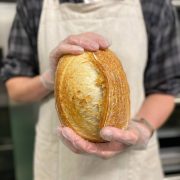
Bread has always held a special place in Ukrainian life — on the table, in everyday values, and in historical memory. During the Holodomor famines, people survived on “bread” made from dried and ground acorns, chaff, and even tree bark. In today’s war with Russia, bread has again become a way to endure. In occupied communities, people gather around it — sharing knowledge and finding new ways to make food from almost nothing.
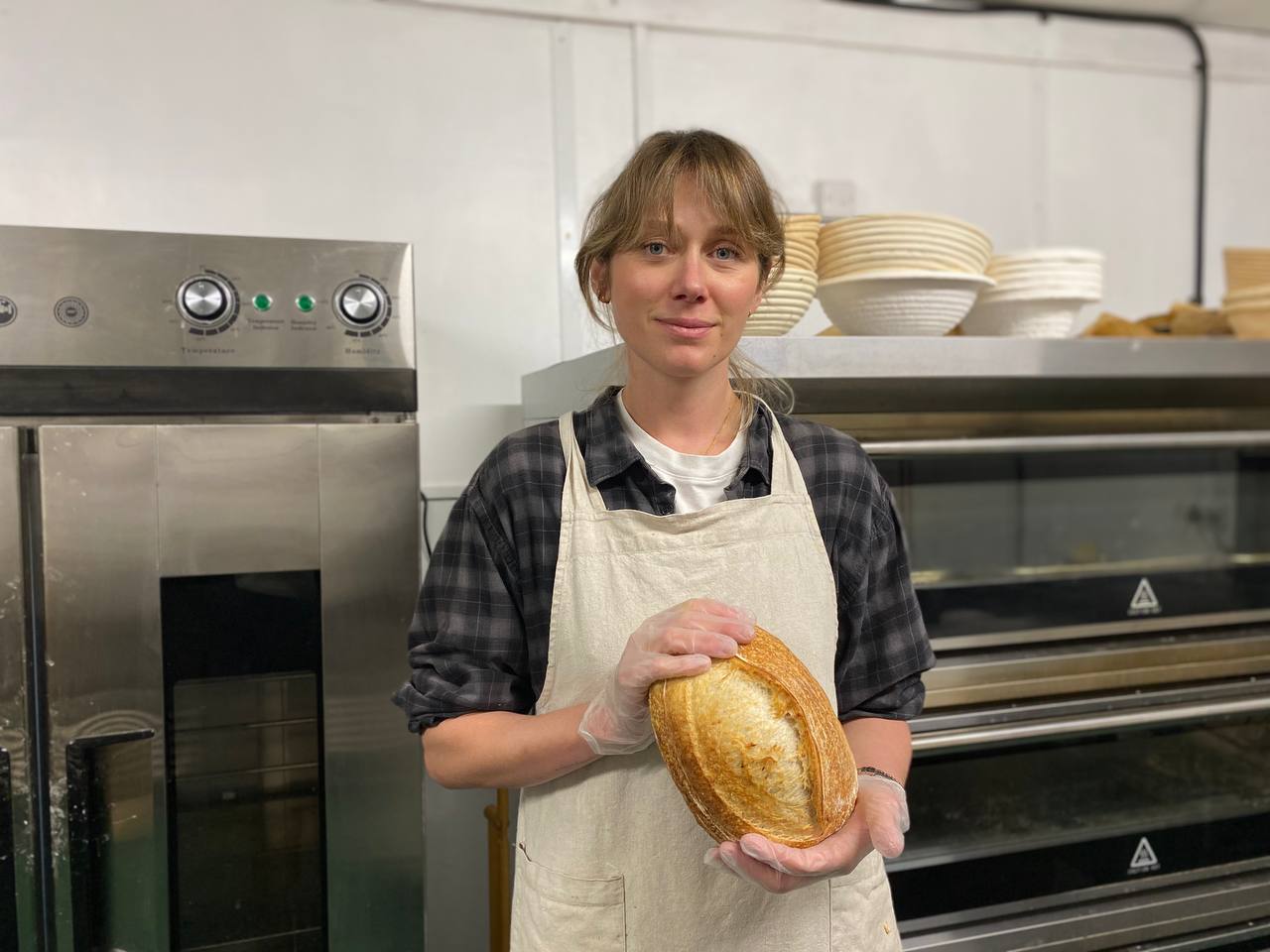
This is what happened to Valeriia Ivanyushenko from Kherson. During the occupation, she taught herself to bake sourdough using a starter she made by hand. It helped her family get through food shortages — and it also became a psychological lifeline, a small routine that made fear more bearable. Today, Valeriia lives in a small village in Britain. She runs her own baking business, makes sourdough using the same starter she brought from the occupied Kherson region, raises two children, and walks the dog she adopted in her new life.
Life before the war
Before the full-scale invasion, Valeriia lived with her family in a residential area in Kherson’s suburbs. Her husband ran a business, while she and a close friend organised women’s events — photoshoots and workshops.
Everything changed in February 2022. Her husband had to close the business, the events stopped overnight, and Russian forces occupied the area where Valeriia lived. Alongside the psychological pressure, food became increasingly hard to find.
“I had two small children, and our food supplies at home were running out. That’s when I had the idea to make a starter myself and try baking bread. We ate it with tinned food. That’s how it began for me. At first, it was a hobby that helped us survive. Gradually, it turned into a business. I started teaching people to bake bread online, because I had no income and we had to find a way to earn money.”
She remembers the occupation as a terrifying time. Eventually, the family managed to leave.
“The Russians came in very quickly. The occupation happened in the blink of an eye. We lived near the well-known Chornobaivka area, which was attacked over and over again. For me, the occupation was even scarier than the first days of the full-scale war, because of the uncertainty — the feeling that nothing would change. There were checkpoints almost every 100 metres. Soldiers could break into homes, knock the door in the middle of the night — and if you didn’t open, they’d kick it in. They felt untouchable, completely unpunishable. It was especially frightening when they drove up to the house in tanks and about ten armed soldiers stormed inside. You’re sitting there with two small children, not knowing what they’ll do.
It was constantly loud — there was gunfire all the time. By the second month of the occupation, I stopped sleeping at night. By the fifth month, my mental health was very bad. I knew that as a mum I had to hang in there, at least for my children, but I couldn’t, so my husband and I decided to leave everything and go.”
By then, almost all routes to and from Ukraine were closed — except for one road to Zaporizhzhia, which was often shelled, making evacuation extremely dangerous. The family decided to leave via Russia.
“First, we went from Kherson to Crimea, then to Russia, and then to Europe. That journey was its own kind of horror — I can’t even find words to describe it. At the checkpoint entering Crimea, they checked everything: phones, social media, messages. They questioned us about business, asked what language we spoke at home. I speak Ukrainian, so they kept me there for a long time and accused me of being a Nazi.”
Looking for a new home
The decision to evacuate was painfully hard. Valeriia and her husband had a large home, and their family lived nearby, but life under occupation was growing increasingly difficult, and the hope of liberation was fading by the day.
At first, they considered moving to the western part of Ukraine, but they didn’t know where they would live or how they would afford it. They were living off savings, and their safety net wouldn’t last long.
“My husband and I talked through many options — Poland, Germany, France — but we didn’t know the languages. England felt like a relatively stable country where the children could get a good education. My husband and I spoke English, and I had a feeling we’d be close in mentality to British people — and I wasn’t wrong. I understand we’re different in some ways, but also similar — people are friendly, kind, thoughtful. The children settled in relatively easily. They’re happy — my daughter already speaks English with no accent and behaves like a local, and my son feels quite comfortable here as well.”
They first arrived in Kettering, Northamptonshire, though they didn’t stay long in the sponsor’s home and moved quickly into different accommodation. Later, she and her husband decided to divorce, and she asked the local council to help find a new place for her and the children.
A house was found in Bulwick, a village north of Kettering, with a strong sense of community, right in the centre, near the church. From the outside, it looks like a classic old English stone house, with pastel-coloured doors and windows and greenery around it — even in winter. This is where Valeriia lives with her children today. In Bulwick, for the first time since leaving, she had a clear thought: “I’m where I’m meant to be.”
Not long after moving, she adopted a poodle named Bubble. Puppies were being rehomed via a local community group for a small fee. Valeriia says it wasn’t easy to decide at first, but her son persuaded her — he had been asking for a pet for a long time.
“My daughter was four when we went through all of this — she doesn’t really remember much, but my son was six. He remembers the explosions and the danger, how we hid in basements during shelling. Even last summer, when we visited Ukraine, he was scared to go back — he said he would be killed, that he didn’t want to go. I understood that a dog might help him cope with stress.
At the same time, I was on my own — no husband, no stable job, just odd work here and there, driving the children to clubs — so why would I adopt a dog on top of everything? As I went through a very emotionally heavy period, I remembered what it’s like to have a dog. In Kherson, we had a Labrador who died of old age. I needed to hug someone fluffy, too — to calm down, to feel joy again. So, the decision was spontaneous and thought-through at the same time. I saw a post in a local group and told the children, “Tomorrow we’re going to see a dog.” That’s how our furry friend came into our lives.”
Coming back to bread
Once she felt a bit more settled, Valeriia returned to her hobby — sourdough baking — although the path to running her own business was long, and far from easy.
“When I moved to England, my skills saved me again. I’m trained as a criminal lawyer, but I couldn’t work in that field here without the right documents and qualifications, and with small children, it was impossible to go back to studying, but bread is something you can make with your own hands — and by then I already knew how to do it well.”
Valeriia says that her experience of war and occupation shaped what she does now.
“In a normal life, I would never have come to baking bread myself. My parents always said you need a good education, a well-paid, prestigious profession to feel secure in life, but reality turned out differently. It’s important to be able to do something with your hands, something that is needed anywhere, no matter the country or language. War and occupation are terrible, but without them, I would never have learned to bake bread, and I would never have arrived where I am now. Baking is a very meditative process. Working with dough helped me calm down. It helped me survive difficult times in Kherson — and later in England, after the move.”
A bakery as an anchor
In Bulwick, Valeriia first got a job as a cook in a local café-shop. She told people about her bread there, and little by little, customers began to appear.
“I baked at home in my kitchen and sold the bread to shops, and at the same time, I worked in a hotel cleaning rooms. Word of mouth works really well here — and soon I had regular customers.”
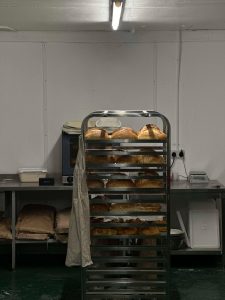
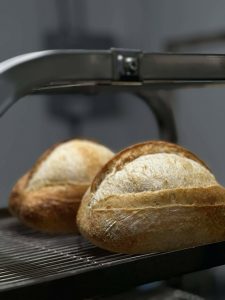
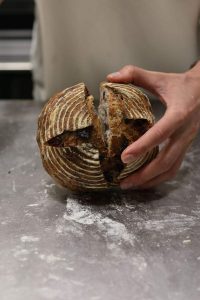
Later, she was noticed by investors who decided to help with space and equipment. The process took time — more than six months passed between the first contact and Valeriia moving from baking in her own kitchen into a bakery. She now works in a professional set-up with a fermentation tank, an industrial oven and fridges.
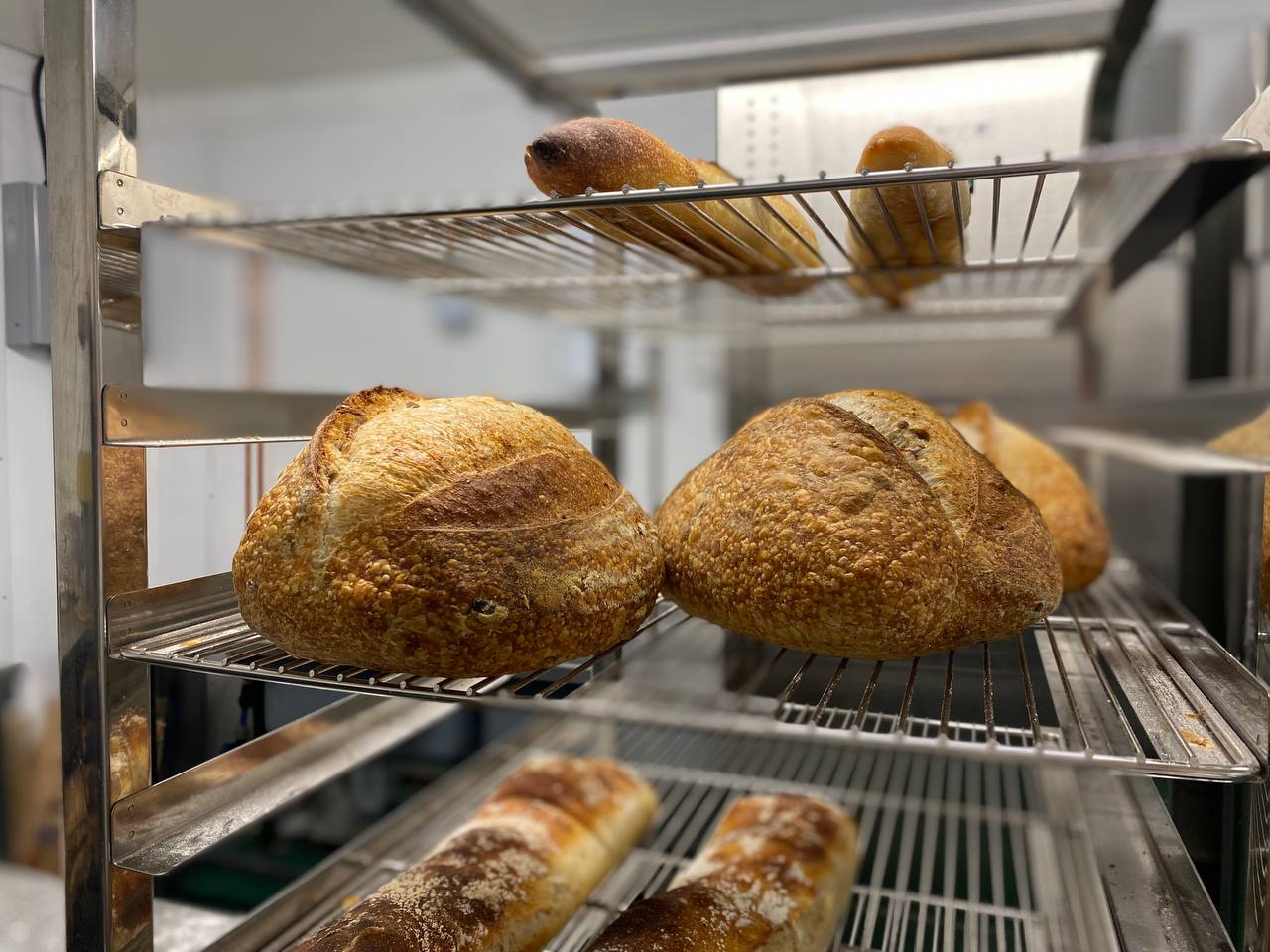
The bakery is located on a farm that also produces and sells venison. From Tuesdays to Saturdays, Valeriia heats the oven, “feeds” the starter, mixes the dough and bakes. She says the move into the new space was difficult — it took nearly a month to get the processes running smoothly — but having a bakery allows her to work faster and more professionally. In the past, with large orders, she had to get up at 4 or 5 in the morning, because her home oven could bake only four loaves per hour. Now she can easily make 40–50 loaves a day.
Her next dream is to increase the number of orders enough to hire someone, because when she does everything alone, any trip or interruption stops the business completely.
“Because I’m on my own, I’m responsible not only for baking. I handle bookkeeping, clean the bakery, receive deliveries, and fulfil orders. I’m also a mum; sometimes I have to pick up the children from school or take them to activities. I really want to have someone to help, to take some of the load off.”
Valeriia says sourdough bread takes time to make — almost two full days from start to finish.
“My customers place orders in advance because I first need to prepare the starter, then mix the dough and put it in the fermentation tank so it can rise. I check and fold it over five or six hours, then leave it in the fridge overnight. The next morning, I shape the loaves, put them into tins and bake. When the bread cools a bit, I deliver it — I have four regular wholesale customers, usually local cafés or shops.”
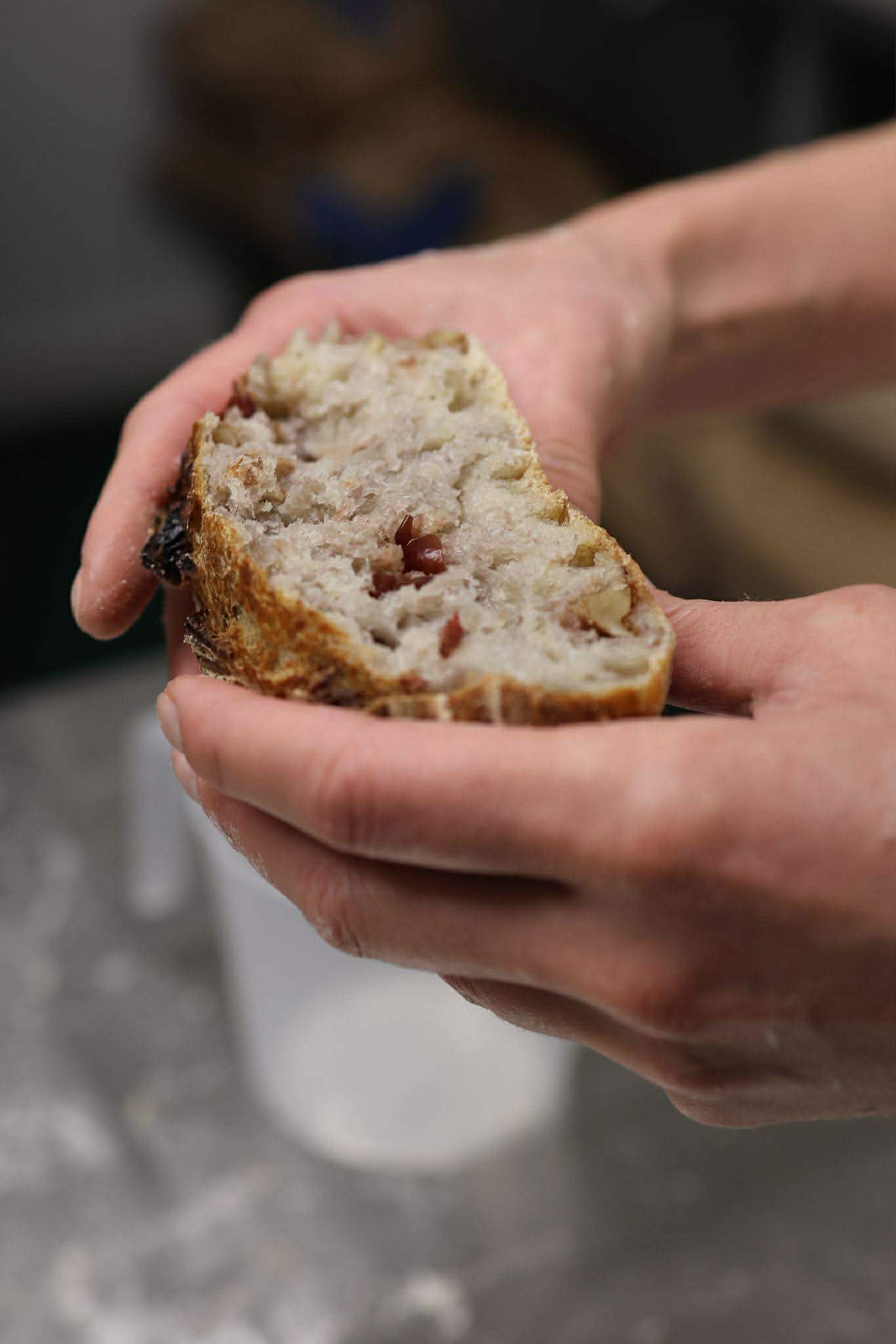
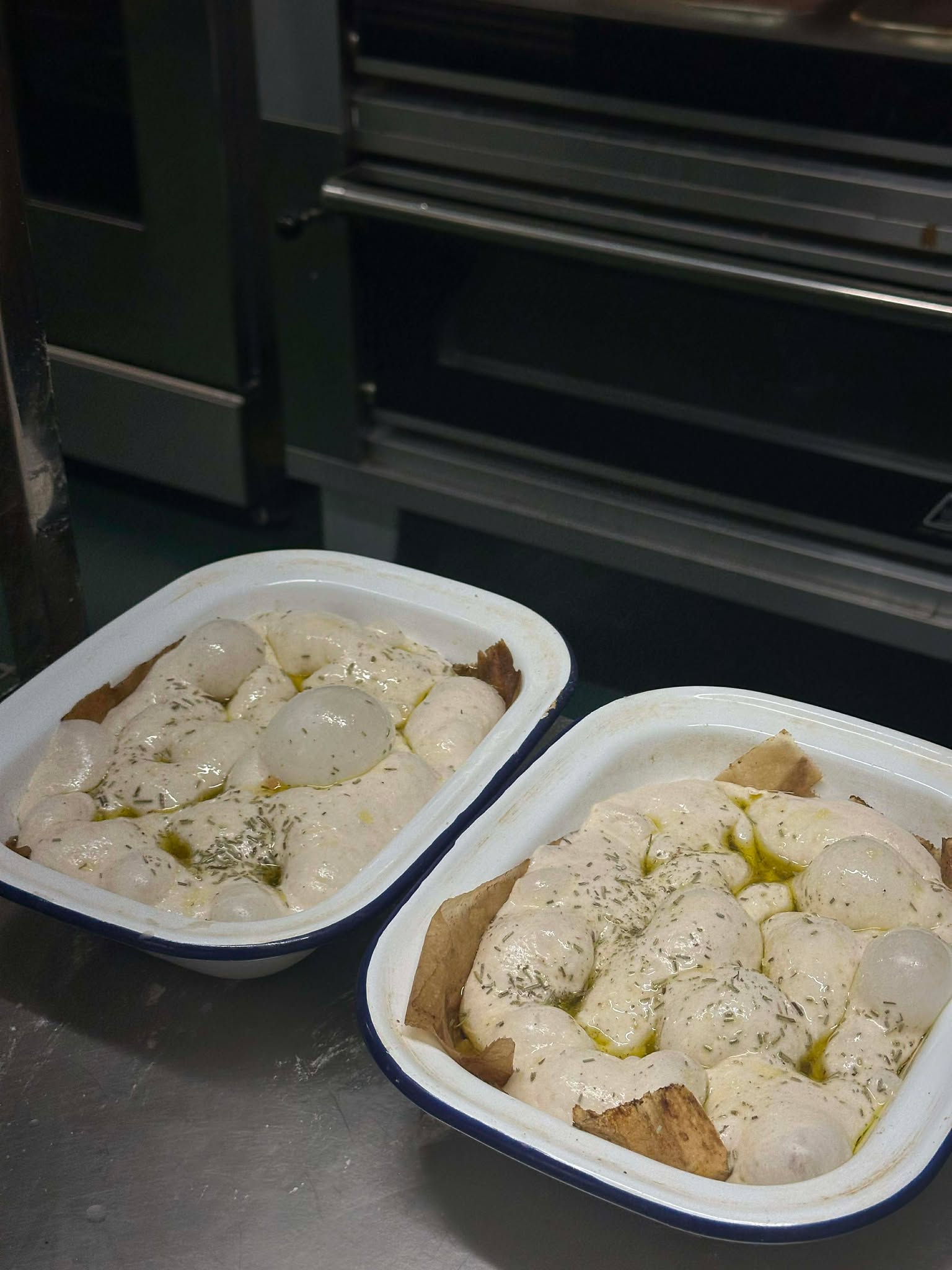
She sells far more than just classic white bread. Valeriia bakes up to ten different kinds: wholegrain, rye with caraway, chilli and cheddar, olives, different seeds, plain and onion ciabatta, and focaccia. Her absolute bestseller is chilli and cheddar.
“It isn’t hot — more just pleasantly spicy. The chilli adds a kick, and the cheese balances the flavour. It’s perfect with soup, but you can also eat it on its own — it’s almost like a meal.”
Feedback is consistently positive. In fact, when her oven broke in summer, and she had to stop baking for a while, she emailed her customers to explain — and some offered to help repair it, or even buy a new one, just so the supply of bread wouldn’t stop.
“Sometimes I have moments when I feel like giving up. I think it would be easier to take a stable job, for example, cleaning in a hotel, to earn a regular salary, and not carry all the responsibility. Then I think: I can’t leave these people without bread. They need what I make.
It’s especially touching when I pull up for a delivery and see customers already standing there, waiting. Locals call me “Sourdough Lady”. How can I stop bringing them bread?”
Bread with its own character
For anyone who wants to start baking at home, Valeriia recommends beginning with a sourdough starter. Hers has been “alive” for five years: she made the first one in Kherson and simply kept feeding it ever since. She travelled with it in dried form.
“A starter is basically just flour and water that ferments under the right temperature. Fermentation creates beneficial bacteria that help the dough rise. If someone lives nearby, I’m happy to share my starter — but it’s easy to make your own.
Mix flour and water, and leave it at room temperature for about 48 hours. Then feed it with more flour and water. Repeat every 24 or 48 hours, depending on the temperature, for about a week. That’s how you get a ‘mother starter’ you can keep for life, just by feeding it.
All the bread I bake here comes from the starter I made back in Kherson. Everyone’s starter turns out different — bacteria on our hands, temperature, even the mood we’re in — it all affects it. It’s like a living organism. I saw this clearly at an in-person workshop last year: everyone made a starter using the same recipe and container, but one person’s grew so much it climbed out of the jar, and another person’s barely rose at all. It’s impossible not to be fascinated by it.”
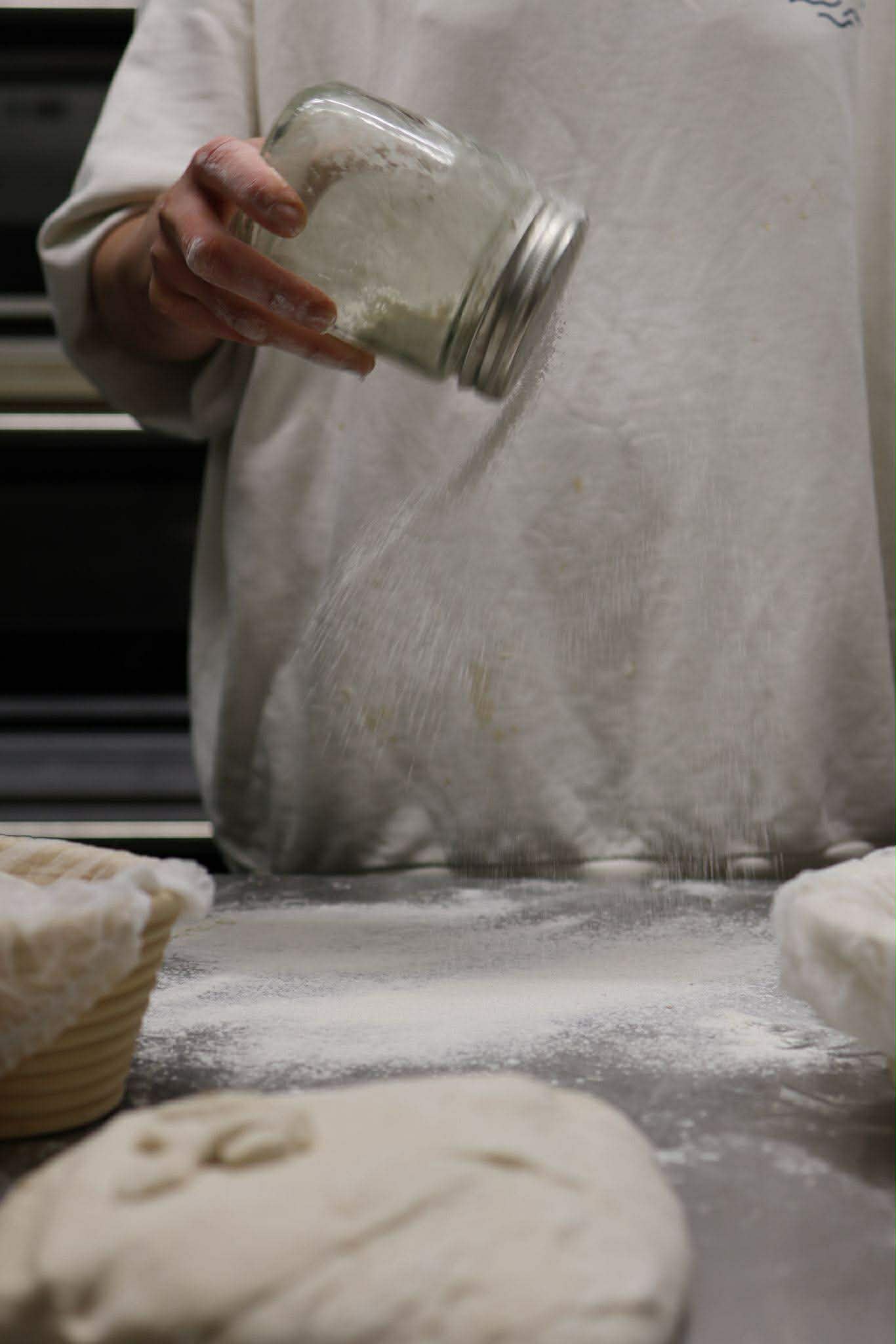
Once you have a starter, you mix it with flour and water to make the dough. Valeriia suggests starting with white flour, as it’s the easiest to learn with.
“I always tell people: first, practise until you can bake a white loaf well. Make it 25 times until it’s consistently perfect — and only then move on to other types. Rye is more difficult — it needs longer mixing and resting. Add-ins are tricky too: olives can release liquid and change the texture.”
If you don’t have a professional oven at home, she recommends baking in a pot with a lid and adding water to a separate dish in the oven.
“Sourdough is moist and needs steam in the oven, otherwise, it becomes tough. For cookware, I’d recommend a lidded casserole dish — it works best. Without steam, the loaf won’t open up properly, and you won’t get that good crust ‘ear’ on top.”
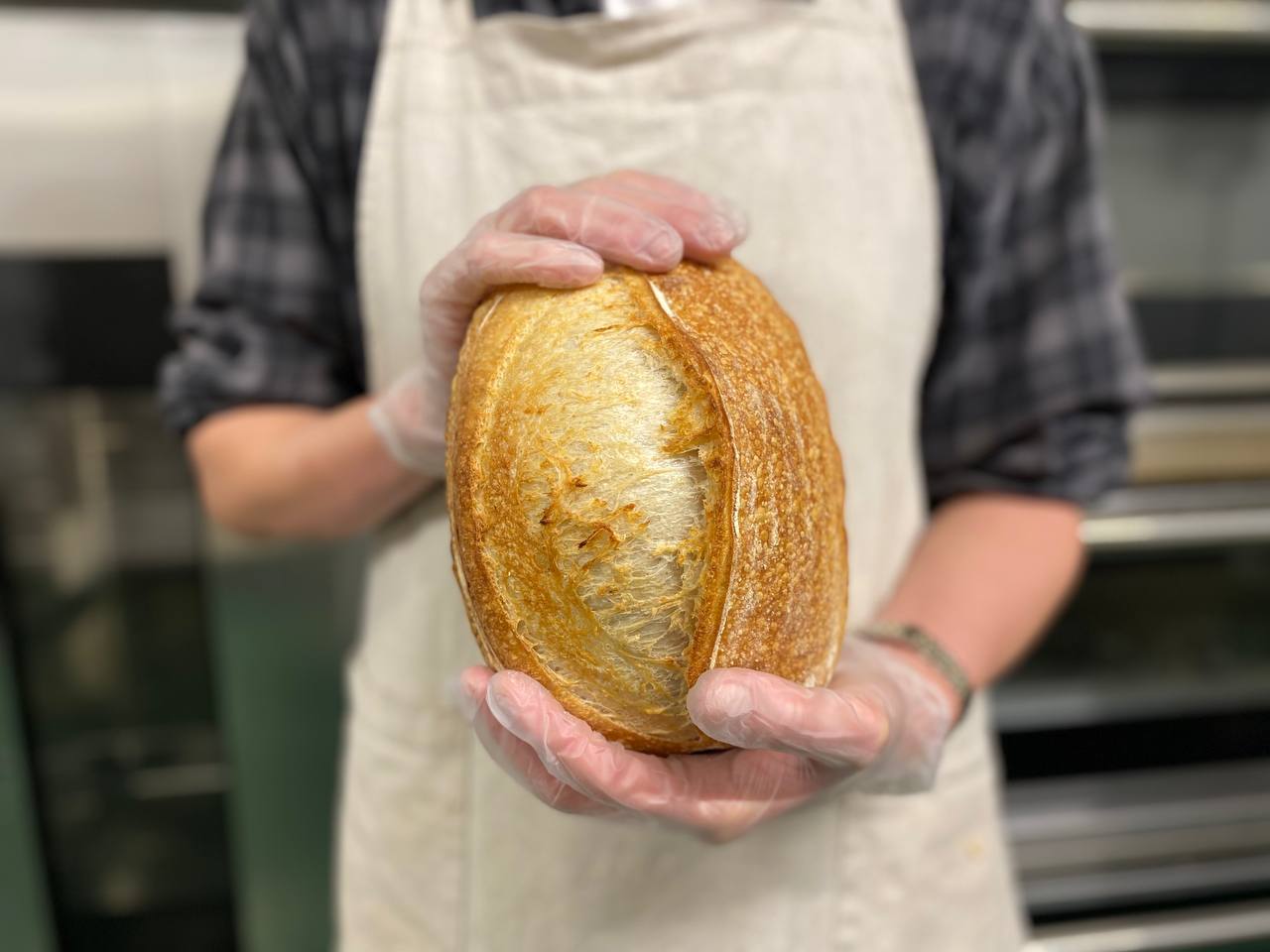
Valeriia shared her recipe for white bread for those who want to try baking on their own.
White Sourdough Bread (1 loaf)
Ingredients
- 300g white flour
- 225g water
- 60g active sourdough starter
- 6g salt
- Mix flour, water and sourdough starter until combined. Cover and rest for 30 minutes.
- Add salt and mix gently until incorporated.
- Bulk ferment for 4–5 hours at room temperature, folding the dough every 30–45 minutes during the first 2 hours.
- Shape the dough into a round loaf.
- Final proof in a floured banneton for 2–3 hours at room temperature or overnight in the fridge.
- Bake at 230°C for 20 minutes with steam, then 20–25 minutes without steam, until deep golden brown.
- Cool completely before slicing.
Leave a Reply