
Filled with human bustle and the echo of air-raid sirens, autumnal Kyiv breathes with the first hints of frost. Yet, as soon as you cross the threshold of the Museum of the History of Kyiv, you find yourself in another dimension entirely — a space where soft music plays, light shimmers across canvases… and in the mirrors, one can glimpse not only one’s own reflection, but also the presence of the Artist himself. For here, until 9 November, the exhibition “Ivan Marchuk. Probuzhdennia” (“Awakening”) unfolds — a retrospective of the legendary Ukrainian painter Ivan Marchuk, who was listed among The Daily Telegraph’s “100 Living Geniuses.” He is also a People’s Artist of Ukraine and a laureate of the Taras Shevchenko National Prize of Ukraine.
 Two Halls — Two Facets of Creativity
“Ivan Marchuk. Probuzhdennia” (“Awakening”) is not merely an exhibition, but a world entire — where paintings coexist with memory, music, dreams, reveries, and the story of Ukraine itself.
The exhibition spans two halls. The first is intimate, almost secretive, dimly lit and filled with mirrors and quiet reflection. The second — bright, resonant with birdsong, adorned with enchanting, almost magical landscapes. Between them lies a kind of cut-out tunnel, inspired by the artist’s own motifs.
Tamila Kalytenko, Head of the Museum’s Exhibition Department and one of the curators of the project, guides me through a miniature tour — one that feels less like a conventional excursion and more like an enthralling journey. Her commentary draws attention to some of the artist’s most emblematic works.
The first hall introduces visitors to two of Marchuk’s early cycles — “The Voice of My Soul” (“Holos moiei dushi”) and “Blossoming” (“Tsvitinnia”). They seem to mirror the painter’s inner universe: his dreams, symbols, and childhood memories. According to Ms. Kalytenko, over fifteen distinct creative cycles — or “Marchuks,” as the artist calls them — are known today. They vary in style, technique, and even in materials. Whether living in Ukraine or in emigration (Marchuk now resides in Vienna), he has never abandoned national tradition. It resonates throughout all his works, in one form or another. Each painting bears a title, often bestowed long after its creation — and many, she notes, were born of dreams.
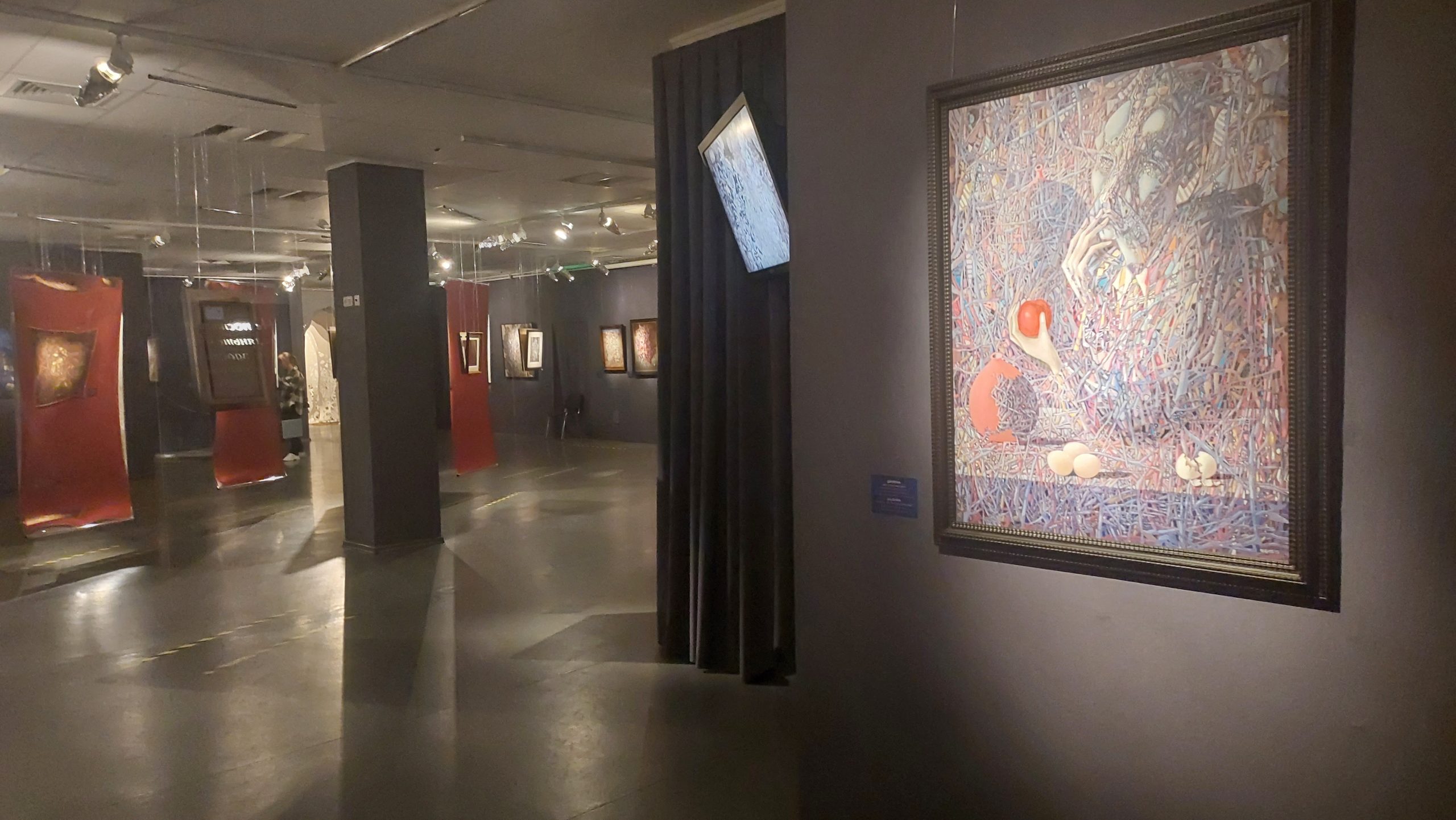 “Later, we discovered something fascinating,” says Tamila Kalytenko. “In art schools, the quality of a work is often tested by viewing it in a mirror — it reveals whether proportions are correct, the composition harmonious, the overall balance preserved. In the same way, with Marchuk’s paintings, the mirrors reveal hidden dimensions — details invisible at first glance. Thus, in this space, mirrors create a special effect: we gaze at the paintings, and Marchuk gazes back at us.”
The Master Has No Cityscapes or Commissioned Portraits
Among the works presented are some of the artist’s earliest pieces, including “Cossack” (“Kozak”), dating back to the 1960s.
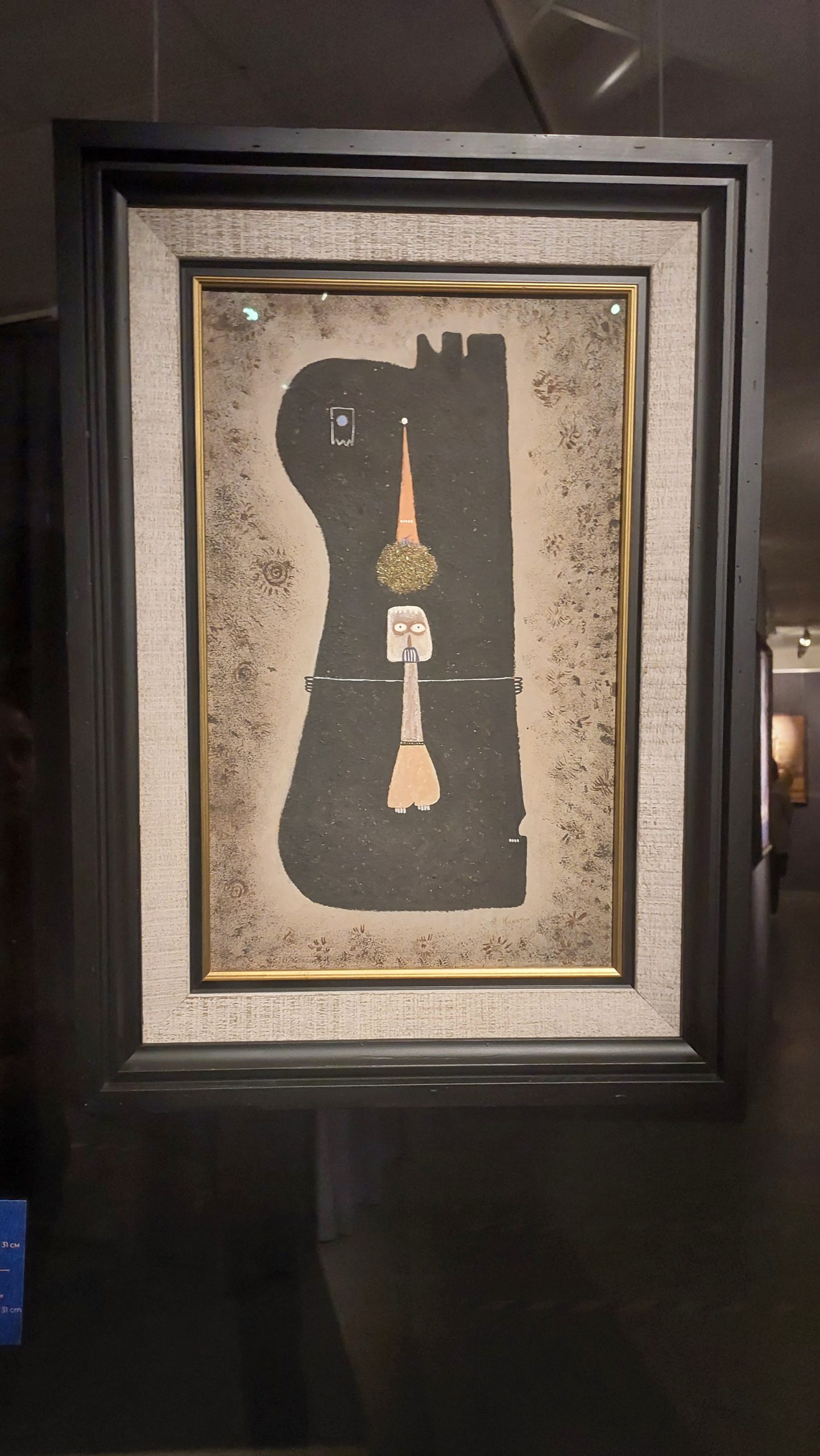 Technically, it falls outside the chronology of “The Voice of My Soul” (“Holos moiei dushi”) cycle, yet it is from such paintings that Ivan Marchuk’s creative path truly began. This work reflects a different approach to painting — another visual language from the one that would later define his art. Even so, the artist’s unique style already begins to emerge.
The piece was created after his move to Kyiv in the 1960s, at a time when Alla Horska was organising an auction to support dissidents, and Marchuk agreed to contribute one of his works. The painting later came into the hands of Liudmyla Semykina, another prominent figure of the Sixtiers movement (shistdesiatnyky).
Marchuk’s circle always included members of the intelligentsia and leading figures from various fields. He painted portraits of them, but never on commission — despite pressure from the Soviet system. Whether living in the USSR, Europe, America, or Australia, he remained true to himself, painting only what he saw and felt, not what was ordered.
“The painting The Voice of My Soul is the trunk of his creative tree,” explains Ms. Kalytenko. “All other cycles are its branches. The Master began this one in 1965 and continues it to this day. For this exhibition, we have gathered works from 19 private collections and 9 museums, though many more cultural institutions hold his pieces. He is most deeply cherished in his native Ternopil region. Ivan Marchuk grew up in a deeply traditional rural family. His father worked with his hands, crafting objects of use, while his mother cared for beauty and harmony. This environment — steeped in labour and reverence for the earth — became an invisible yet powerful foundation for the artist. Subconsciously, it permeated his entire life and, inevitably, his art. That is why you won’t find a single cityscape in his oeuvre — no tower blocks, no cars, no concrete — despite his long years in major cities. Even now, living in Vienna, he does not paint the city’s splendour. Instead, he returns to the timeless images of nature that shaped his childhood. The painting A Fortune-Teller Told My Fortune (“Meni vorozhka vorozhyla”) speaks precisely of this.”
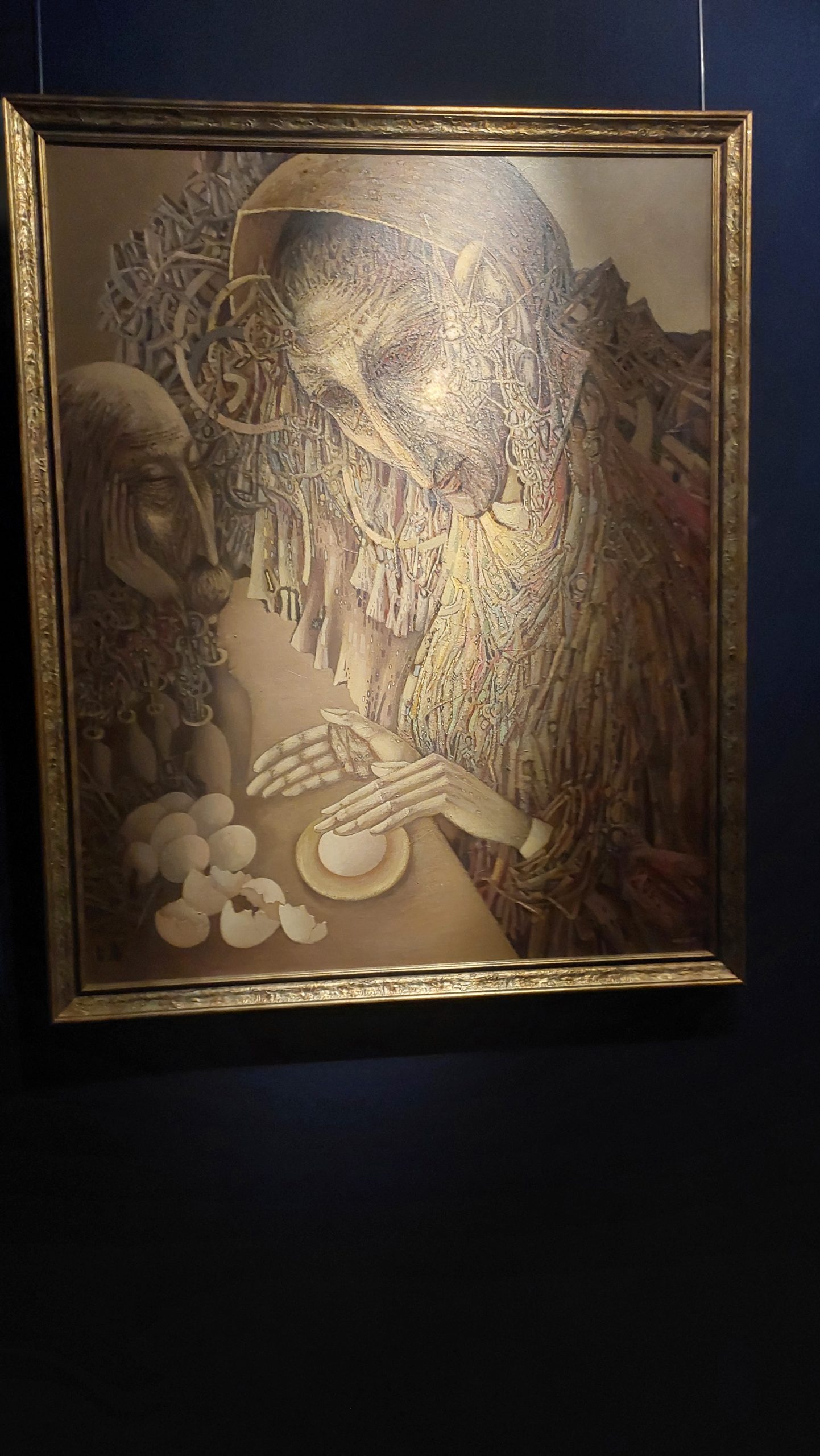 Ms. Kalytenko recalls another fascinating detail from the artist’s biography. Marchuk created many of his works to the music of Myroslav Skoryk, especially to one of his most beloved compositions — “Melody” (“Melodiia”), which he would often play while painting in his studio. Ivan Marchuk’s daughter, renowned violinist Bohdana Pivenko, recorded this piece for him on disc, so that he could listen and work to its rhythm at any time. In gratitude, the artist gifted several of his paintings to the Skoryk family — three of which are now on display at the exhibition from their private collection.
“Awakening” — A Symbol of the Rebirth of the Ukrainian Nation
The exhibition takes its title from a landmark work — “Awakening” (“Probudzhennia”), created in 1992 in the United States, shortly after Ukraine declared independence. The painting depicts a young woman wearing a wreath and blue-and-yellow ribbons amidst golden wheat fields.
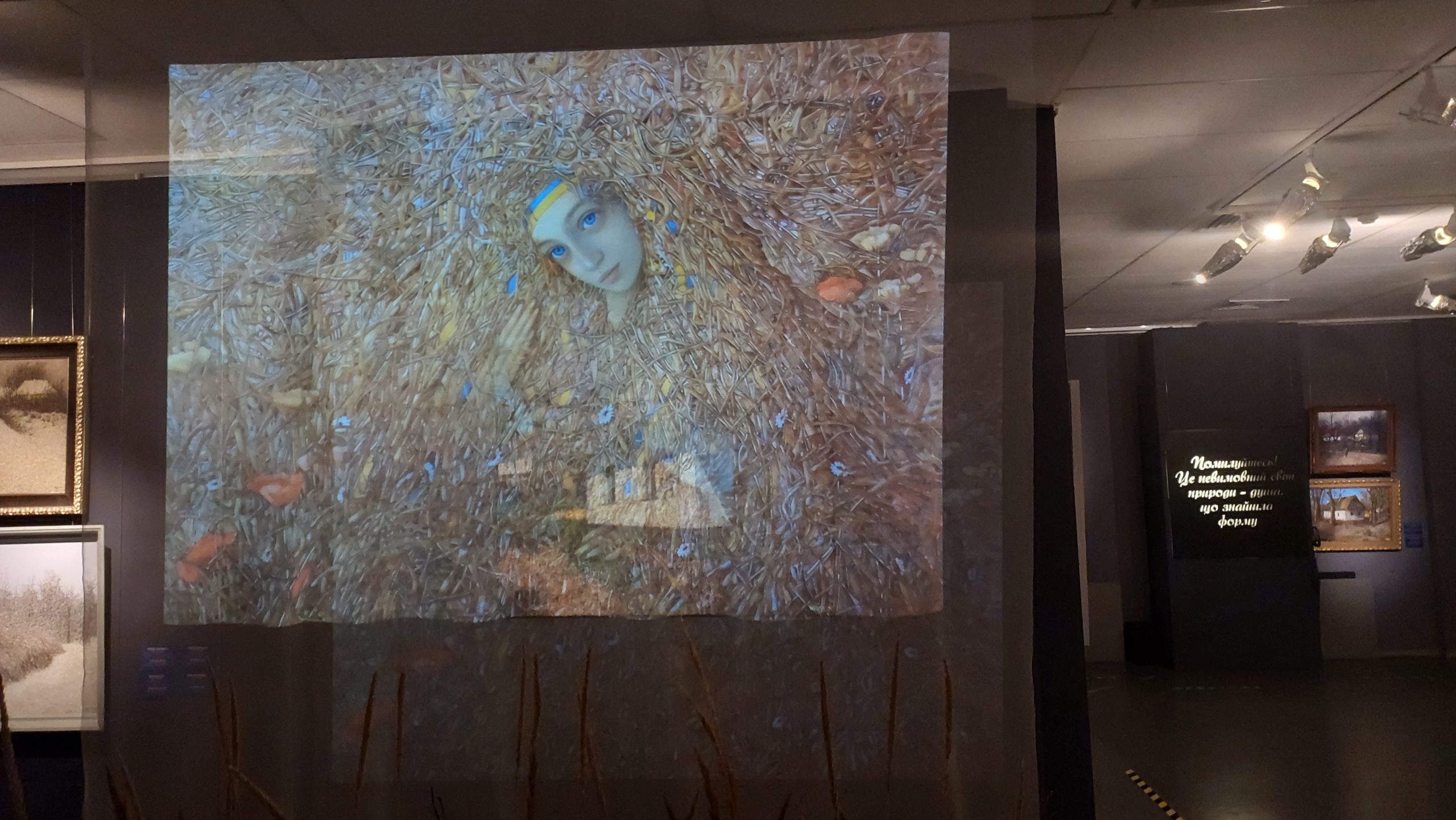 “This piece was born out of the joy of our country’s newly gained independence. There exist several author’s versions and variations of it. The original remains abroad, while one version is held at the Consulate General of Ukraine in the USA. Here, we present a video projection of it. Our nation, too, is awakening now — even amid hardship, people are turning more to culture, to their artists. So it is deeply symbolic that this particular painting lends its name to the exhibition.”
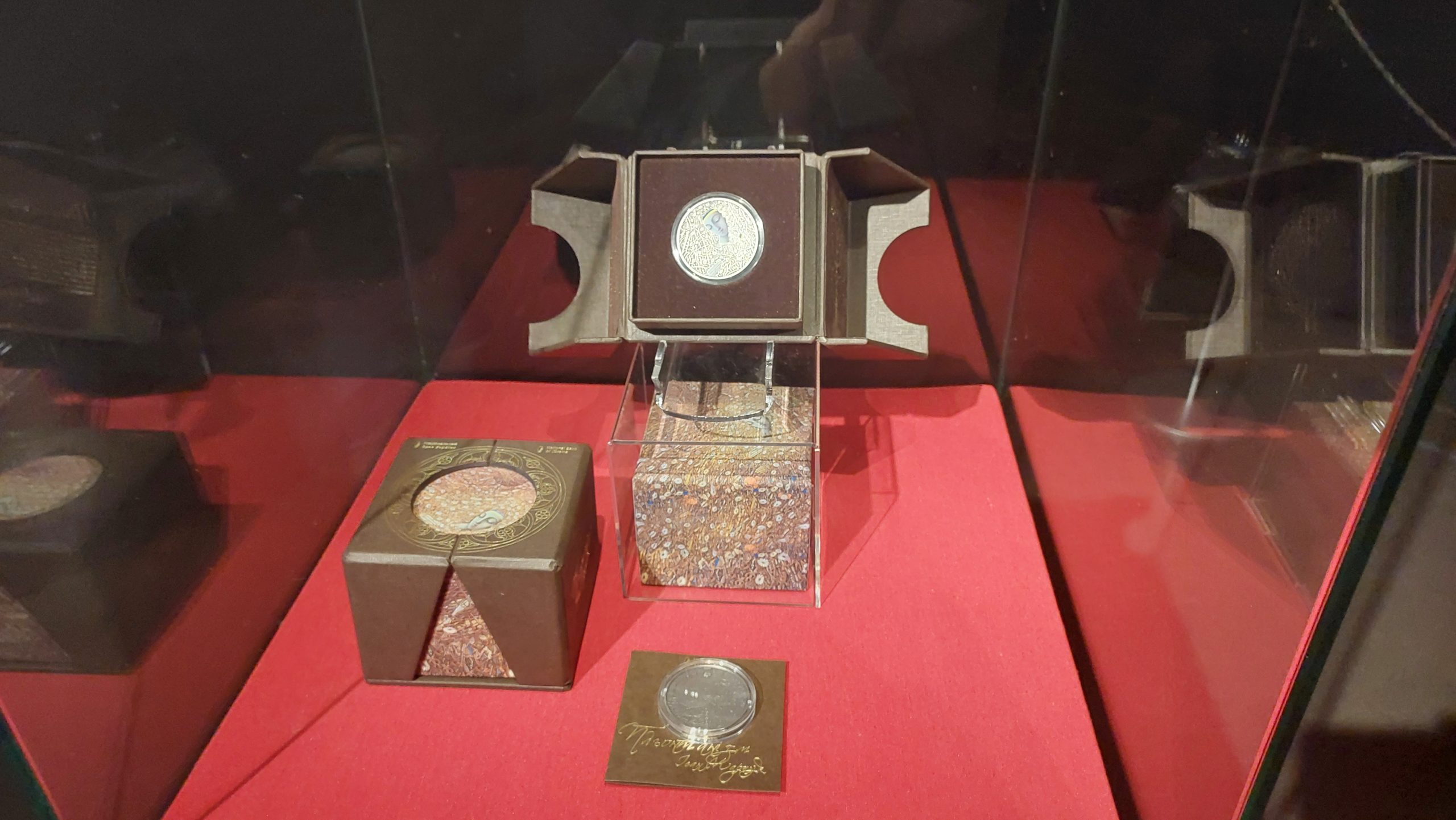
Through modern technology, the girl in the projection comes to life — she opens her eyes, thus enacting her awakening in the literal sense. In 2024, the National Bank of Ukraine released a commemorative silver coin entitled “Pliontanism”, featuring this very painting — also displayed at the exhibition.
 As mentioned earlier, Ivan Marchuk almost never painted commissioned portraits. All of them were created for close friends and loved ones. Among his works are several self-portraits. One of the most renowned, “On the Road” (“U dorozi”), depicts the artist twice — one figure in the present, and another as a silhouette stepping into the future. There is also a mysterious female portrait, believed to portray philologist and scholar Vira Sulyma. The piece carries two alternative titles — “Of Autumn Melodies” (“Z osinnykh melodii”) and “And Autumn Beyond the Window” (“A za viknom osin”).
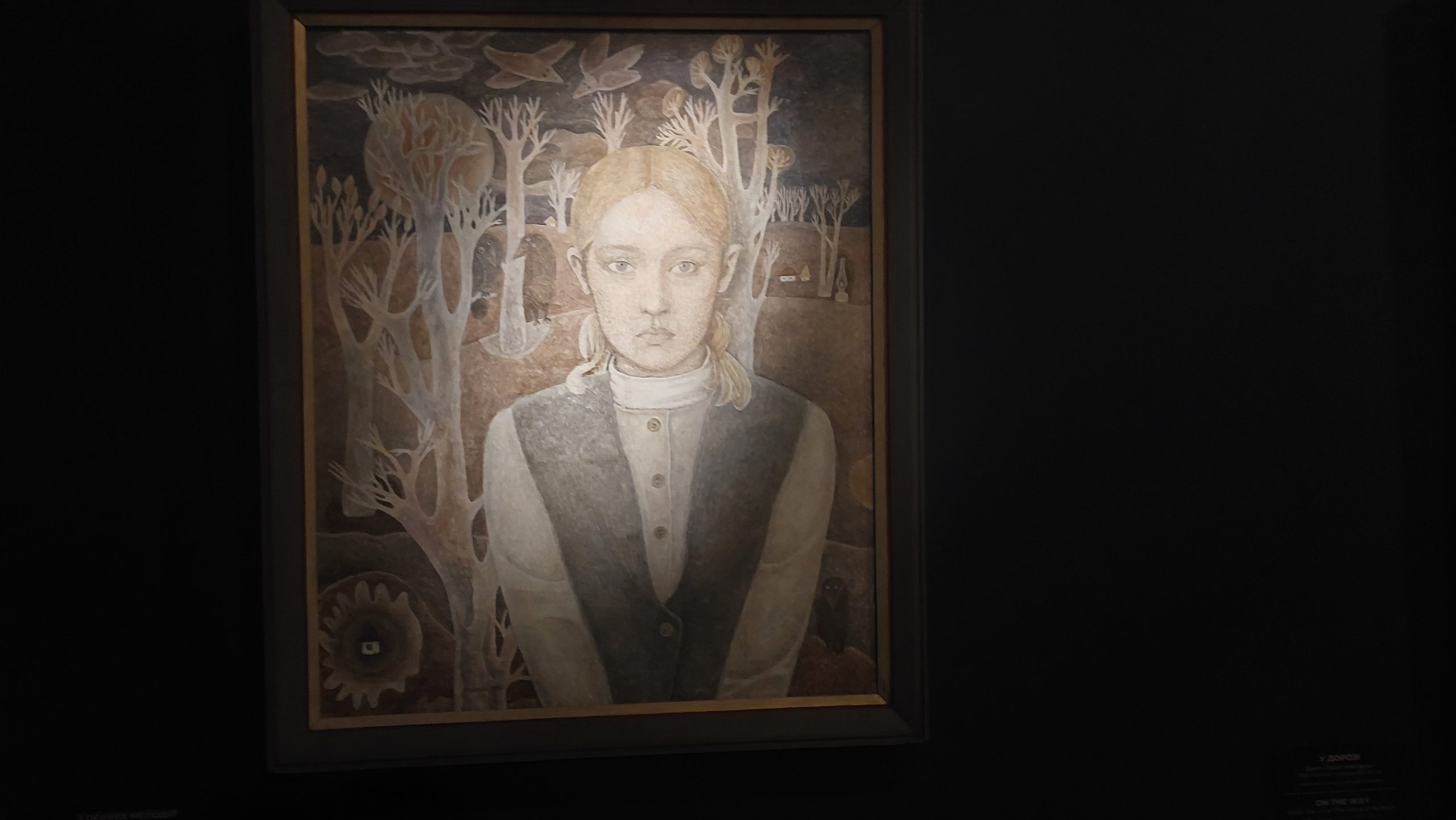 “You can sense the sadness behind this image,” Ms. Kalytenko says. “The crows, the hidden cottage, the woman’s sorrowful gaze… When Ivan Marchuk visited us, he confirmed her name — yes, she was Vira — but he shared no details of their story. Perhaps it was a love that never came to be.”
Marchuk’s Landscapes — The Inexpressible Beauty of Ukraine
The second hall of the exhibition is devoted to landscapes. Everywhere here — the boundless Ukrainian fields, forests, and villages. In the early works of the 1950s, one can sense the influence of the Lviv school of painting. Yet even then, Marchuk was beginning to break conventions, seeking his own visual language. Eventually, he developed a distinctive technique — pliontanism (“pliontanizm”) — which emerged in 1972, when thin, interwoven lines began forming a unified image.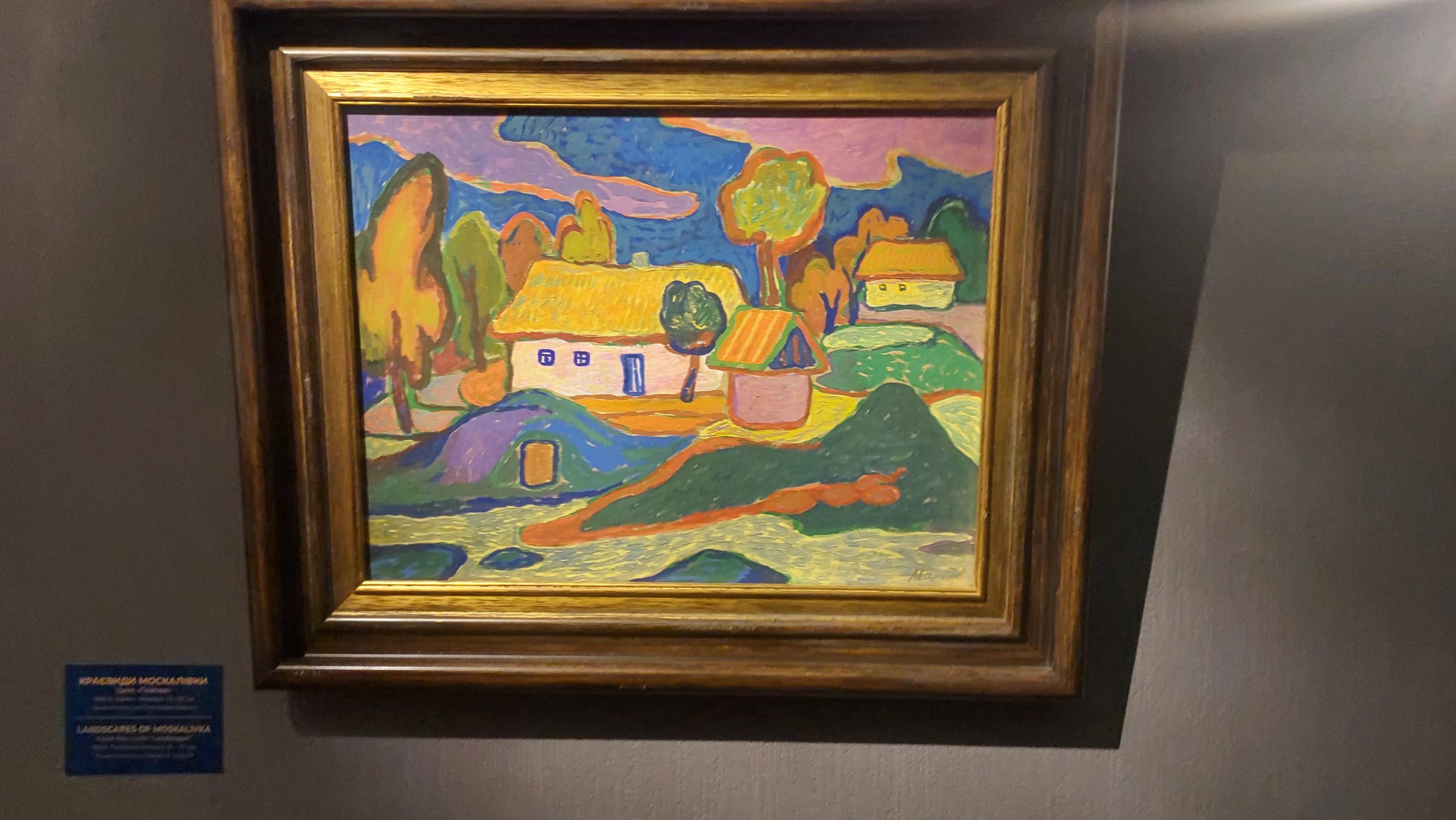
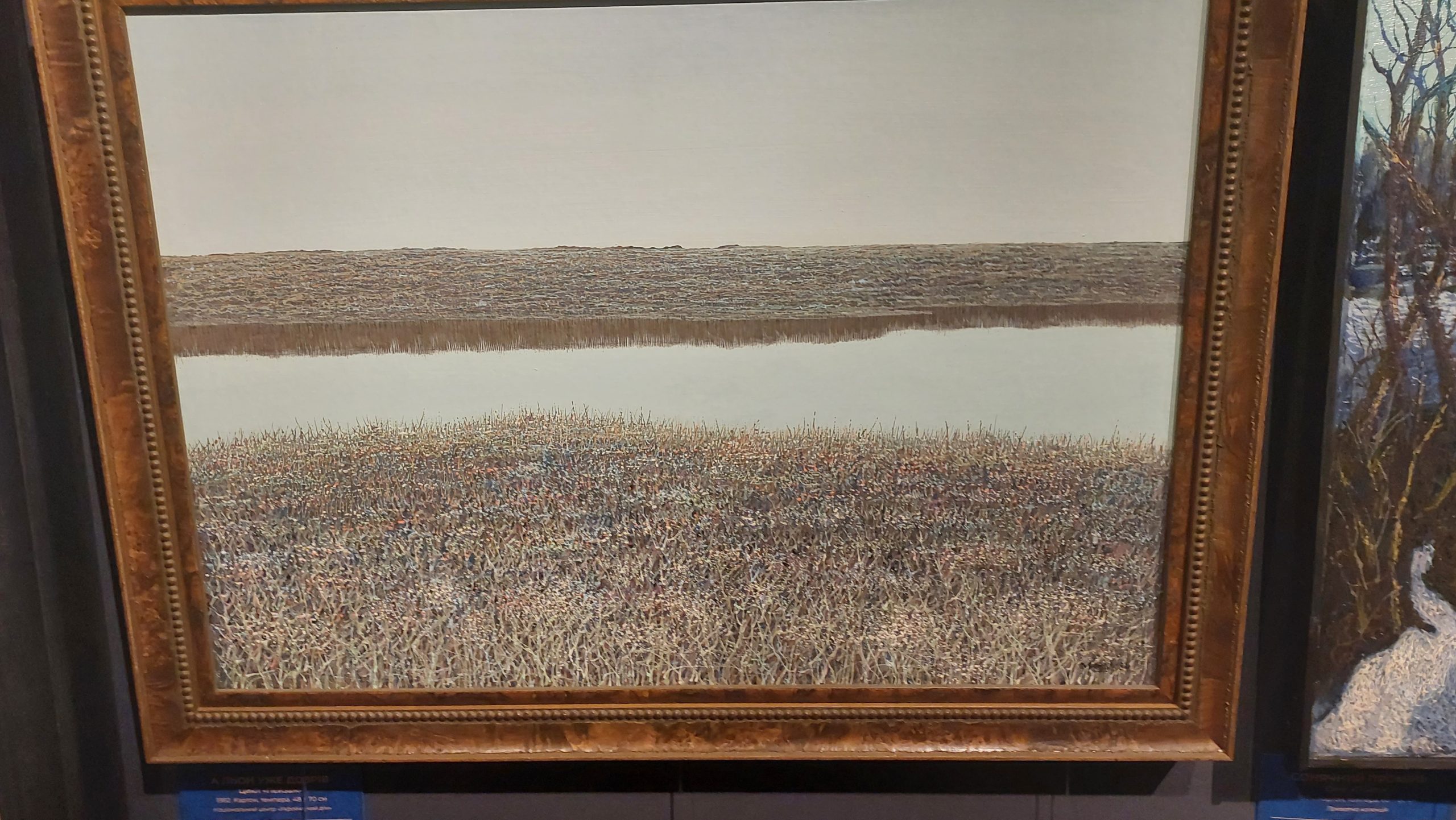
“His landscapes are made up of the finest strokes, layered one upon another,” explains Ms. Kalytenko. “At first, he did not even use a brush, but a metal tool. Each layer of paint had to dry before the next was added. That is why the canvas acquires such texture — almost a three-dimensional effect, with ridges and subtle roughness. Many have tried to replicate this method, but only Marchuk achieves such depth. It is incredibly demanding — requiring immense patience, a precise sense of colour, and a perfect grasp of composition. And although pliontanism was originally a family joke (in Halychyna dialect, ‘pliontaty’ means ‘to weave’), today the term is recognised throughout the art world.”
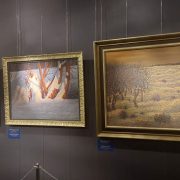
It is hard to tear yourself away from this hall. Even after studying all the paintings, they seem to call you back again and again — enchanting with their interplay of colour and light. Among them is the unique “Blooming Steppe” (“Kvituchyi step”), which the artist gifted to an exhibition organiser in gratitude during one of his first shows. Another landscape, created during his emigration to Australia, radiates nostalgia for his homeland.
 There are also works from the private collections of celebrated Ukrainian writers Pavlo Zahrebelnyi and Oles Honchar. Often, inscriptions on the backs of paintings read “For your birthday,” “In remembrance” — small yet intimate notes revealing how deeply Marchuk’s art was woven into the life of Ukraine’s intellectual circles.
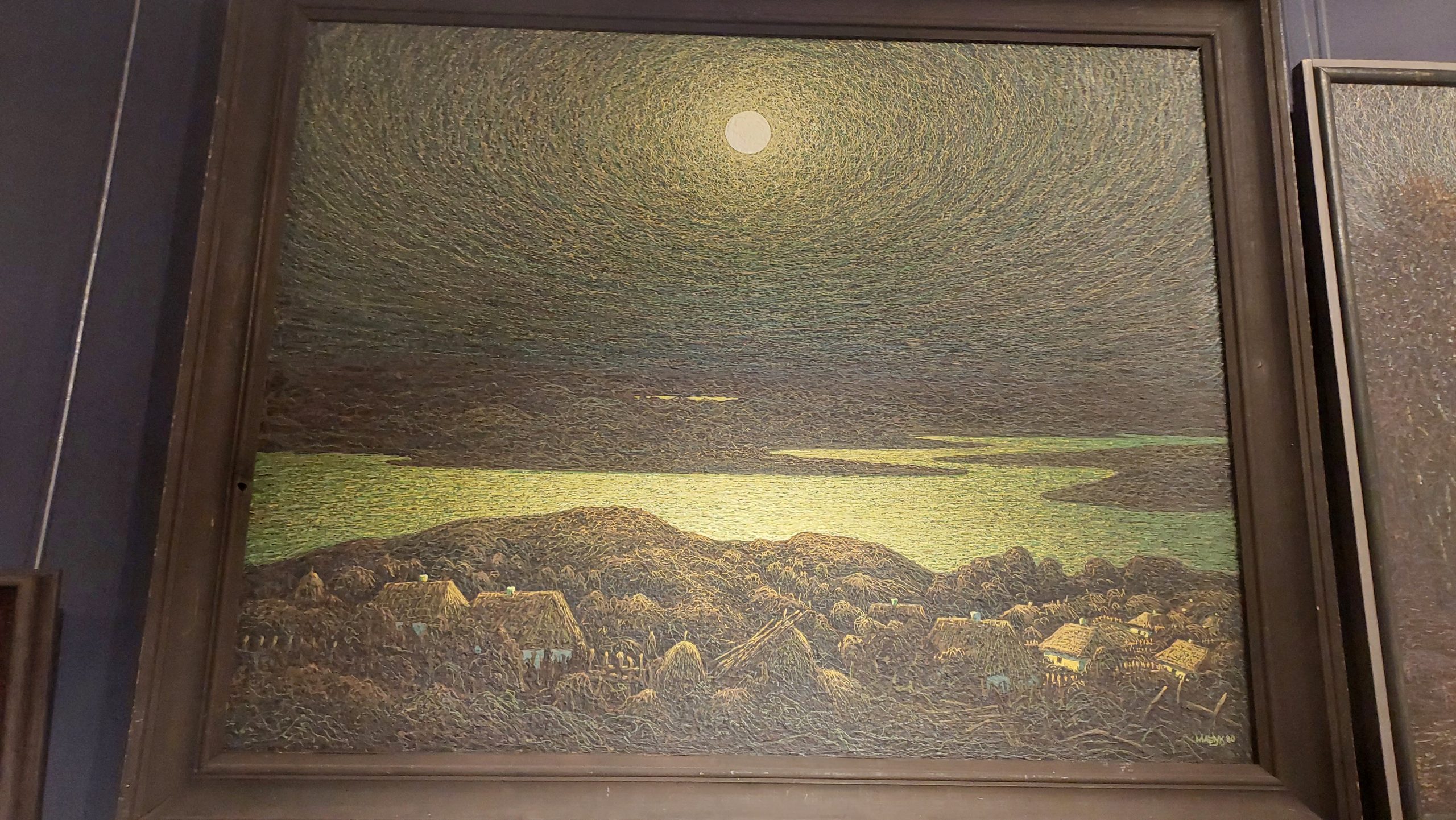
The exhibition also owes much to key cultural institutions across the country — including Mystetskyi Arsenal, Ukrainian House, and the Sheptytsky National Museum in Lviv. It is heartening that even under martial law, museums have opened their archives to contribute works to this exhibition. A special place among them is held by “The Moon Has Risen Over the Dnipro” (“Ziishov misiać nad Dniprom”) — a version owned by the state, from the Taras Shevchenko National Preserve in Kaniv. Another version of this work was sold at auction last year for a record-breaking sum for a Ukrainian artist — around 225 thousand pounds. That story brought even greater international recognition to Marchuk’s name.
 How the Museum Received a Priceless Gift from a Genius
Recently, the collection of the Museum of the History of Kyiv gained a new treasure — a painting donated by the Master himself. This year, during his visit to the Ukrainian capital in August, Ivan Marchuk presented one of his works to the museum.
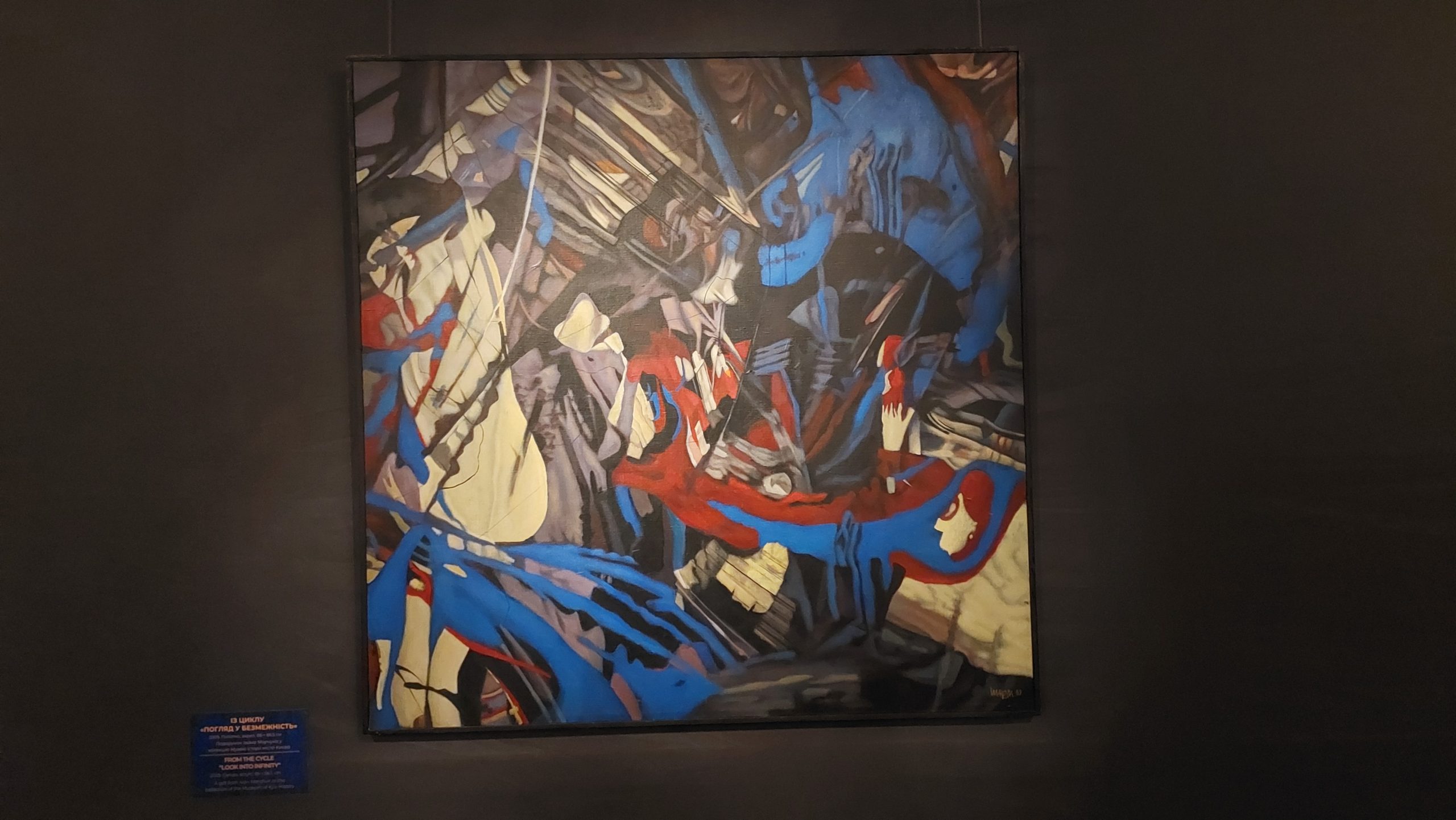
“Despite our long-standing cooperation with the artist, the museum had not previously owned a single piece of his,” says Ms. Kalytenko. “Of course, we hoped that would one day change. It is an extraordinary honour when an artist donates a work to a museum collection. We dreamt of it — and this year, our dream came true. During his recent visit, Ivan Marchuk gifted us a painting from his cycle ‘A Glance into Infinity’ (‘Pohliad u bezmezhnist’), begun in 2008. The donated work dates to 2009.”
“A Glance into Infinity” lies slightly outside the concept of the current exhibition, as that cycle is not otherwise represented. Yet thanks to the Master’s generous gesture, the painting was added to the display after his visit. The artist personally signed it for the museum: “For the joy of visitors.”
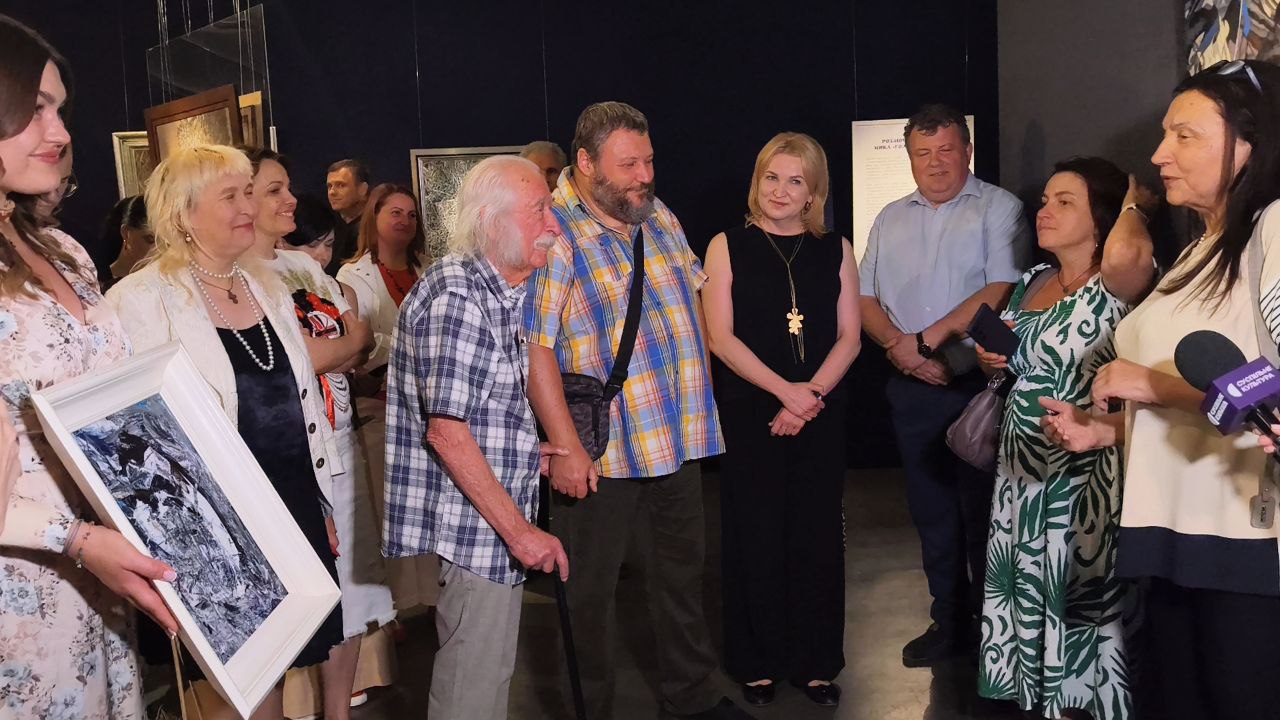
 Marchuk’s personal attendance at the exhibition became a memorable event for the Museum’s team.
“Despite his age, he set aside his walking stick, spoke with visitors, took photographs, exchanged energy, and seemed to draw energy from those around him,” recalls Ms. Kalytenko. “For him, it is vital to be near his audience — he draws life from that connection. Sadly, the war delayed the creation of a dedicated museum of the artist in Kyiv. But those plans remain — and they must come to fruition. He is no longer merely an artist; he has become part of Ukraine’s cultural diplomacy. We must honour him here, so that not only admirers abroad, but Ukrainians themselves, can take pride in their genius.”
Author: Yulianna Kokoshko
Ukrainian language editor: Anastasiia Zanuzdanova
English language editor: Marc Kukh
Photographs: by the author and from the archives of the Museum of the History of Kyiv
Leave a Reply